
Escala Urbana is a bus-stop rest area.
This product design project explored how art and design could be integrated into Monterrey’s public spaces to create a more welcoming, engaging, and human-centered urban experience. The process began with identifying everyday urban needs, examining issues such as the lack of resting areas for pedestrians and public transportation users, limited artistic expression in shared spaces, and the increasingly industrial character of the city. Rather than approaching these as isolated problems, the project investigated how a single intervention could address functional needs while also enriching the cultural and emotional experience of the urban environment.
Through a process of research, benchmarking, and user interviews, the project explored how people experienced and perceived the spaces they frequented. The findings revealed a positive interest in interactive installations, and inspiring messages, alongside practical needs for seating, shade, shelter from rain, cleanliness, and safety. These insights helped establish a direction that balanced functionality with cultural expression, ensuring that the proposed solution responded to people's everyday experiences rather than introducing art as a purely decorative element.
The design concept centered on creating artistic installations that combined functional seating with opportunities for interaction and cultural engagement. The intention was to transform waiting times and everyday journeys into more meaningful experiences, making public spaces more comfortable while introducing moments of curiosity, inspiration, and connection. Research into existing urban interventions helped inform the exploration of solutions that could integrate art into the built environment while remaining accessible and relevant to the community.
Beyond the physical intervention, the project considered the broader social role of public design. It explored how collaborative art initiatives could strengthen community ties, encourage participation, and foster a greater sense of belonging. The concept also aimed to highlight Monterrey’s cultural identity and offer a more human perspective on a city often perceived through its industrial character. By bringing together functionality, artistic expression, and community engagement, the project proposed a way to make public spaces more inclusive, inspiring, and connected to the people who use them every day.

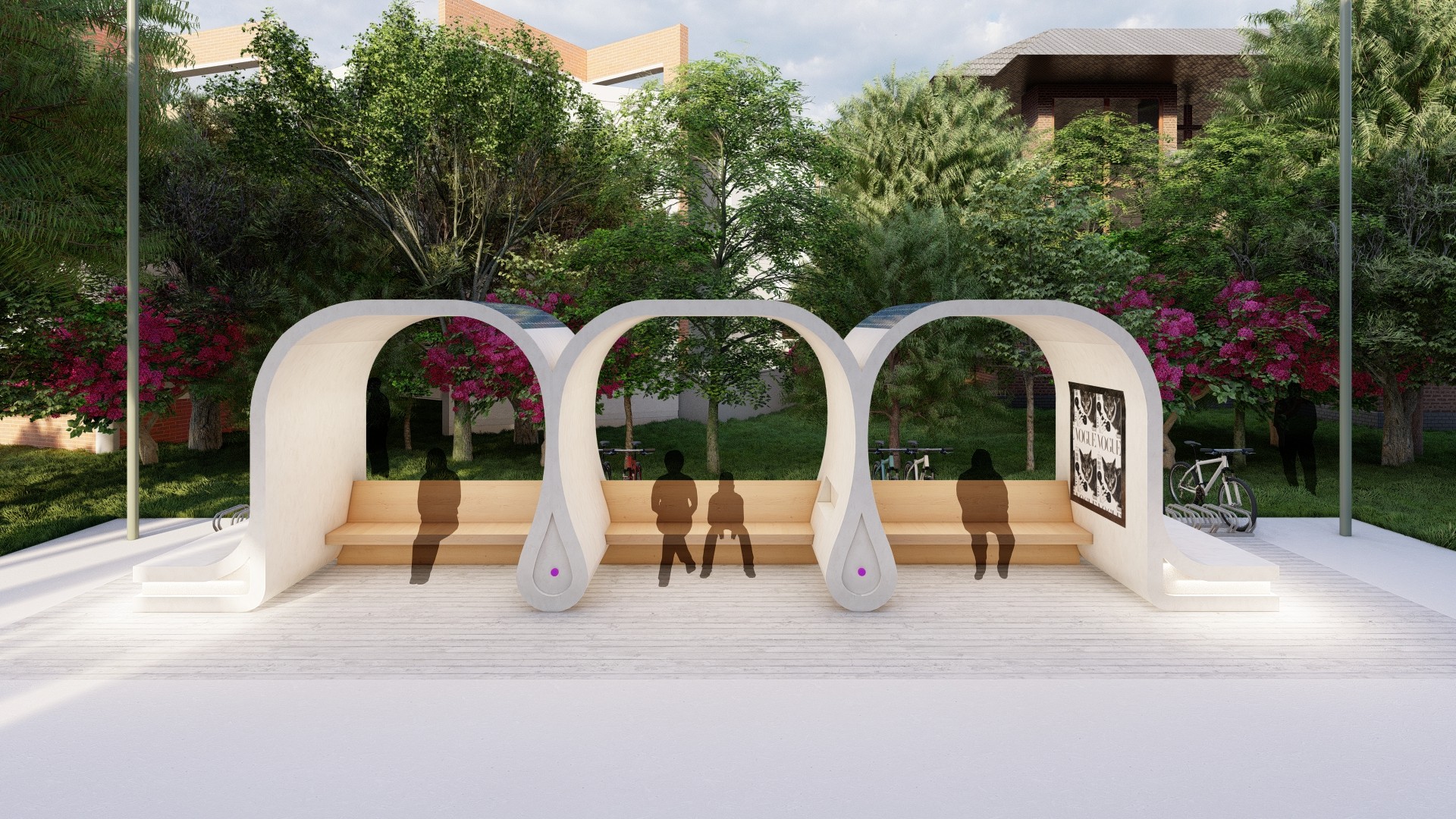
This object was a mockup for the city of Monterrey, Mexico prior to the current solution.
TEAM
Creative Direction: Eva Schroeder
Design: Andrea Criollos, Bárbara Ghio, Eva Schroeder, Yolanda Mazur
Rendering & Architectural Assistance: Maria Inés Valdez
2024
